What should a hair transplant quotation include?
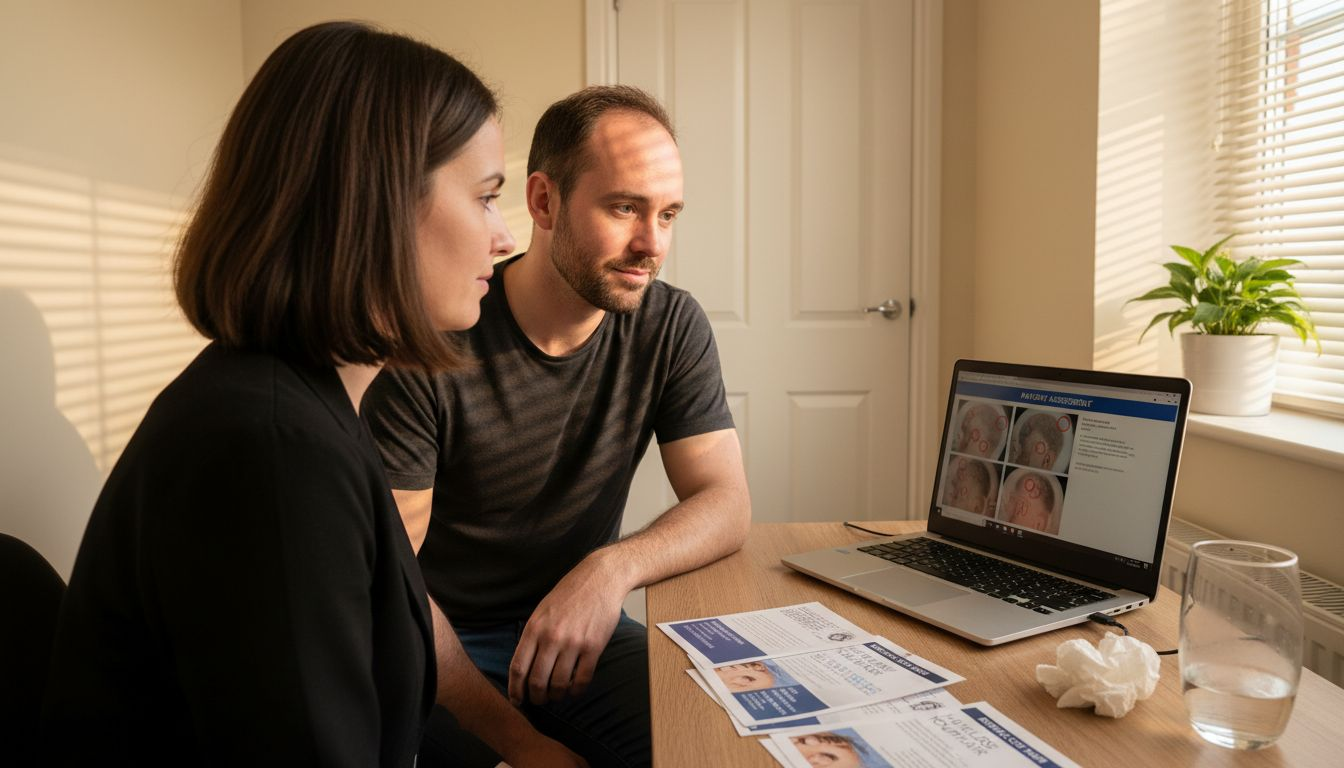
Before paying a deposit, ask for the procedure, graft estimate, aftercare and additional charges in writing.


- How much does a hair transplant cost in Newcastle?
- Which procedures will you be quoted for?
- What drives the price and what should your quote include?
- How do clinics estimate graft counts?
- What happens at consultation and when will you see results?
- Will the NHS or insurance cover your hair transplant?
- How do you choose the right Newcastle clinic?
- Useful sources
- FAQ
How much does a hair transplant cost in Newcastle?
Newcastle clinics use two main pricing formats: a per-graft rate and fixed all-inclusive packages. Per-graft pricing is generally more transparent, with rates varying by surgeon experience, clinic overheads, and technique. Newcastle prices are often lower than those in London, reflecting regional cost differences.
The table below shows typical surgery-only cost ranges at £3.00–£5.00 per graft, which is the standard UK benchmark used by most Newcastle clinics.
| Graft count | Indicative cost (at £3.00–£5.00 per graft) | Typical use case |
|---|---|---|
| 500 | £1,500–£2,500 | Small scar repair or brow fill |
| 1,000 | £3,000–£5,000 | Early hairline recession treatments |
| 1,500 | £4,500–£7,500 | Moderate frontal thinning treatments |
| 2,000 | £6,000–£10,000 | Frontal and mid-scalp coverage |
| 3,000 | £9,000–£15,000 | Larger coverage or crown work |
Note: These figures are surgery-only benchmarks. Always ask whether your quote includes consultation, anaesthesia, post-op medication, PRP, and follow-up appointments.
A reputable all-inclusive quote should explicitly cover:
- Pre-operative assessment and blood tests
- Surgery and anaesthesia
- Post-operative medication (shampoo, sprays, anti-inflammatories)
- PRP therapy (if offered as standard)
- Follow-up appointments and progress reviews
- Before and after photography
Many UK clinics list surgery-only prices and bill PRP, aftercare medication, and consultations separately. Checking the hidden costs of a hair transplant before you sign anything can save a significant sum.
Which procedures will you be quoted for?
Four techniques appear most frequently on Newcastle clinic price lists: Follicular Unit Extraction (FUE), Follicular Unit Transplantation (FUT), Direct Hair Implantation (DHI), and Sapphire-assisted FUE. FUE is by far the most commonly performed for scalp restoration.
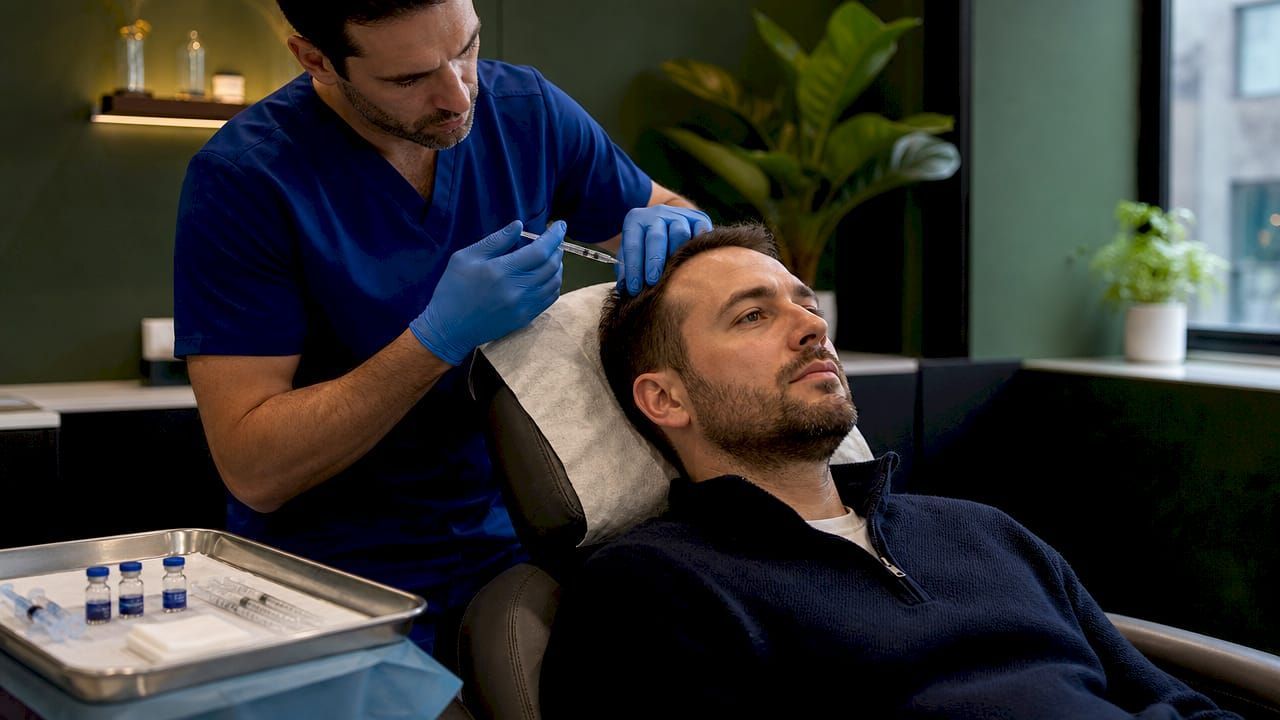
FUE involves extracting individual follicular units from the donor area using a micro-punch tool, then implanting them into recipient sites. Because there is no linear incision, scarring is minimal and recovery is faster. It is the standard choice for most patients and the baseline against which other techniques are priced.
FUT (strip) removes a strip of scalp from the donor area, from which grafts are dissected under magnification. It can yield a high graft count in a single session but leaves a linear scar. Costs are sometimes lower per graft because harvesting is faster, though the trade-off is a longer recovery and visible scarring if hair is worn short.
DHI uses a specialised Choi implanter pen to place grafts directly without pre-made recipient sites. The technique demands more time and precision, which typically pushes the per-graft rate higher. It suits patients seeking very dense packing or precise hairline work.
Sapphire-assisted FUE replaces the standard steel blade with a sapphire-tipped tool for creating recipient channels, which proponents argue reduces trauma and improves healing. Clinics offering this variant often charge a modest premium.
Ask specifically whether a GMC-registered surgeon performs both the extraction and implantation steps, or whether technicians carry out part of the procedure. Surgeon-led surgery typically costs more but directly affects graft survival and the naturalness of results.
What drives the price and what should your quote include?
Graft count is the single largest cost driver. Beyond that, surgeon experience, clinic location, the technique used, and whether the procedure requires more than one session all affect the final figure.
Surgeon seniority matters because experienced surgeons command higher fees and are in greater demand. A clinic with a named, GMC-registered surgeon performing the procedure will generally charge more than one where technicians lead the work. That premium is usually worth paying.
Clinic overheads in Newcastle are lower than in London, which is why regional pricing tends to be more accessible without compromising on clinical standards. Multi-session plans, required when donor supply or patient health limits a single large session, add to the total cost but protect long-term donor density.
“Getting 2–3 written quotes and confirming who performs extraction and implantation is the most reliable way to compare value across clinics.” — Hair Transplant Cost in the UK
A reputable Newcastle clinic quote should include clear details such as:
- Named responsible surgeon
- Total graft count and treatment areas
- Technique to be performed
- Items included such as anaesthesia, medication, PRP, and follow-ups
- CQC and GMC registration verifications
- Aftercare plan and emergency contacts
- Access to before and after photo galleries
Request an itemised quote in writing before committing. If a clinic is reluctant to provide one, treat that as a red flag.
How do clinics estimate graft counts?
Surgeons assess four variables to estimate how many grafts you need: the size of the area to be covered, your hair calibre and density, your desired final density, and the availability of donor follicles at the back and sides of the scalp.
A structured estimate typically works as follows:
- Small area (approx. 500 grafts): Scar repair, eyebrow restoration, or a minor hairline adjustment. At £3.00–£5.00 per graft, expect £1,500–£2,500.
- Early hairline recession (1,000–1,500 grafts): Frontal hairline work for Norwood Stage II–III. Indicative cost: £3,000–£7,500.
- Moderate coverage (2,000 grafts): Frontal and mid-scalp thinning. Indicative cost: £6,000–£10,000.
- Larger coverage (3,000 grafts): Crown and frontal combined, or significant diffuse thinning. At the UK benchmark rate, this typically costs £9,000–£15,000.
Many clinics advise a maximum graft count per session to avoid overharvesting the donor area, which can cause permanent thinning at the back of the scalp. Where more than 3,000–3,500 grafts are needed, a staged two-session approach is often the safer and more effective plan. Your surgeon should discuss this at consultation and document the recommendation in writing.
What happens at consultation and when will you see results?
A consultation at a reputable Newcastle clinic follows a clear sequence, and understanding it helps you prepare the right questions.
- Initial assessment: The surgeon examines your scalp, photographs the thinning areas, and evaluates your donor density and hair calibre.
- Graft estimate and treatment plan: You receive a written estimate of graft count, technique recommendation, and a breakdown of costs.
- Consent and medical history: The surgeon reviews your health history, any medications, and discusses realistic outcomes and risks.
- Written quote: A fully itemised quote is provided before any booking deposit is taken.
After surgery, the recovery timeline runs roughly as follows. The first two weeks involve some redness, scabbing, and mild swelling, all of which resolve without intervention. By three months, transplanted hairs enter a resting phase and may shed, which is normal. Visible new growth typically begins at four to six months, with mature, natural-looking results at 12–18 months.
Ten-year outcome data shows that density can decline modestly over time as surrounding native hair continues to thin. Combining transplantation with medical therapy, such as finasteride or topical minoxidil, improves long-term satisfaction significantly.
Plan at least 7–10 days off work if your role involves public-facing contact or physical activity. Most patients are comfortable in social settings within two weeks, but the scalp remains sensitive for longer.
Will the NHS or insurance cover your hair transplant?
The direct answer is no, in almost all cases. NHSScotland does not routinely fund hair transplants for genetic pattern baldness. Funding is only considered in rare clinical exceptions, such as reconstruction following trauma or burns, via a formal Individual Funding Request (IFR). The requesting clinician must provide documented clinical justification for the exception to be considered.
Regional NHS bodies across the UK apply the same principle: cosmetic hair restoration for androgenetic alopecia is not commissioned. Private medical insurance policies similarly exclude cosmetic hair transplants unless the procedure forms part of reconstructive care following a medically documented event.
For the vast majority of patients, the procedure is funded privately. Common payment options offered by Newcastle clinics include:
- Full payment upfront (sometimes with a small discount)
- Deposit on booking with the balance paid before surgery
- Monthly instalment plans through third-party finance providers
- Interest-free credit for qualifying patients over agreed terms
- Clinic-run payment plans with no external credit check
When reviewing a finance agreement, check the total amount repayable, the APR, and whether early repayment is permitted without penalty. Newcastle Hair Transplant Clinic offers a no-deposit scheme worth exploring if upfront cost is a concern.
How do you choose the right Newcastle clinic?
The most important checks before booking are: confirm the named surgeon is on the GMC register, verify CQC registration, ask for an itemised written quote, and review a documented aftercare plan.
Verifying credentials
The GMC register is publicly searchable at gmcuk.org. Enter the surgeon’s name and confirm their licence to practise is current. CQC registration can be verified at cqc.org.uk. A clinic that cannot provide both registration numbers on request should not be considered.
Reviewing before and after results
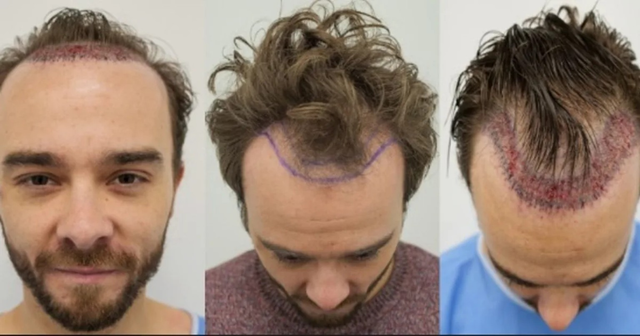
Ask to see a gallery of real patient results, ideally with cases similar to your own hair type, loss pattern, and graft count. Published before and after results from the clinic’s own patients are a far more reliable indicator than stock photography or results from other clinics.
Understanding who does what
Ask directly: does the GMC-registered surgeon perform both extraction and implantation, or do trained technicians carry out part of the procedure? Both models exist legally, but the answer affects the price and the outcome. Get the answer in writing.
Reading patient feedback
Online reviews are useful but should be read critically. Look for patterns across multiple platforms rather than relying on a single five-star rating. Specific, detailed reviews that mention the surgeon by name and describe the recovery experience carry more weight than generic praise.
| Evaluation criterion | What to expect from a reputable clinic | Red flag |
|---|---|---|
| Surgeon credentials | Named GMC-registered surgeon, verifiable online | No named surgeon; technician-only team |
| CQC registration | Registration number provided on request | Unable or unwilling to confirm |
| Written quote | Itemised, includes all costs | Vague estimate; verbal only |
| Before & after gallery | Real patient cases, similar hair types | Stock images or results from other clinics |
| Aftercare plan | Written plan with emergency contact | No follow-up offered post-surgery |
| Sales approach | Calm, informative, no pressure | Urgency tactics; limited-time discounts |
Useful sources
The following authoritative sources were used to verify the clinical and policy information in this article. Bringing questions from these sources to your consultation is a practical way to assess a clinic’s knowledge and transparency.
- NHSScotland Hair Transplantation Policy: The primary Scottish NHS guidance confirming that hair transplants for genetic pattern baldness are not routinely funded, and setting out the IFR process for exceptional cases.
- NHS Hair Transplant Overview: General NHS information on what a hair transplant involves, risks, and what to expect from private treatment.
- ISHRS Hair Transplant Forum International: Peer-reviewed ten-year retrospective analysis on long-term graft survival and the role of concurrent medical therapy in patient satisfaction.
- UK Hair Transplant Cost Calculator: Independent pricing survey covering per-graft benchmarks, regional cost differentials, and common inclusions and exclusions across UK clinics.
FAQ
How much do 3,000 grafts cost in the UK?
At the standard UK benchmark of £3.00–£5.00 per graft, a 3,000-graft procedure typically costs £9,000–£15,000 for surgery only. The exact figure depends on the technique used, clinic location, and quote inclusions.
Will the NHS pay for a hair transplant in Scotland?
NHSScotland does not routinely fund hair transplants for genetic pattern baldness. Funding is only considered in rare clinical exceptions, such as reconstruction after trauma, via a formal Individual Funding Request.
What happens to a hair transplant after 10 years?
Most patients retain good density long term, though ten-year outcome studies show modest density decline as surrounding native hair continues to thin. Combining transplantation with ongoing medical therapy, such as finasteride, significantly improves long-term satisfaction.
Is FUE more expensive than FUT in Newcastle?
FUE is generally priced at a similar or slightly higher per-graft rate than FUT because the extraction process is more time-intensive. DHI and Sapphire-assisted FUE typically carry a modest premium over standard FUE due to the additional precision and equipment involved.
How do I know if a Newcastle clinic is reputable?
Verify the surgeon’s GMC registration at gmcuk.org and the clinic’s CQC registration at cqc.org.uk before booking. A reputable clinic will provide a named surgeon, an itemised written quote, a documented aftercare plan, and a genuine before and after gallery from their own patients.
Dr Harpreet Kalra
Newcastle Hair Transplant Clinic