
Mo Salah’s hair: what photographs can tell us
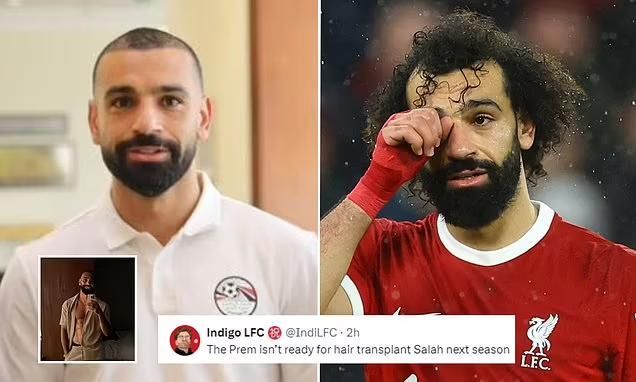
Photographs of Mo Salah cannot confirm a hair transplant or show which treatment, if any, he has had. A change in appearance needs to be separated from a verified treatment history.

Why appearance alone cannot confirm surgery
Hair length, styling, lighting and camera angle can change how much scalp is visible. Hair fibres or other cosmetic products can also affect apparent density. A photograph does not show the donor area in enough detail to establish a procedure or graft count.
Without a clear public account from Mo Salah or an identified treating clinician, claims about a technique, clinic, price or number of grafts remain unconfirmed. The same standard should apply when discussing any public figure’s health or treatment.
How a transplant changes coverage
A hair transplant moves donor follicles into selected areas of thinning or loss. It can improve coverage in a suitable patient, but it does not stop the surrounding non-transplanted hair from thinning. An examination is needed to establish the diagnosis, donor quality and realistic treatment area.
The number of grafts depends on the area to cover, existing density, hair thickness and donor reserve. Two people with similar-looking hairlines may need different plans. See the graft calculator as an illustration, then obtain an individual clinical estimate.
FUE, FUT and DHI
FUE removes follicular units individually and leaves small extraction scars. FUT removes a strip of donor scalp and leaves a linear scar. DHI generally describes placement with an implanter after grafts have been extracted.
These names describe parts of the procedure. They do not establish which method a person has had, guarantee a result or decide what is appropriate for another patient.
What to look for in before-and-after photographs
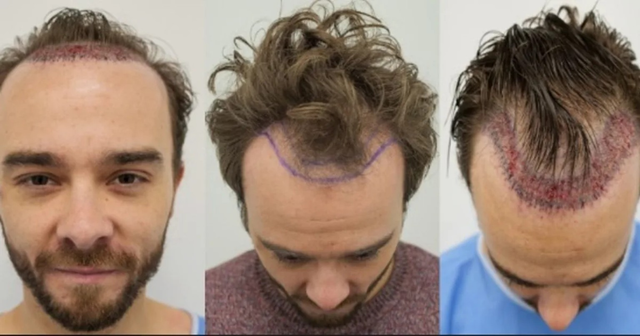
Useful comparisons show the same area under similar lighting, with the time since treatment stated. Hair length, angle and styling should be considered alongside the images. Ask whether other treatments were used and whether the photographs are examples from the clinician you are considering.
A gallery helps explain what treatment can involve. It cannot promise the same density, hairline or recovery for every patient. Donor limitations and likely future loss should be discussed separately.
Recovery and future hair loss
Healing and hair growth happen over different timescales. The appearance shortly after surgery is not the final result, and transplanted hair shafts may shed before new growth develops. Follow the treating clinic’s advice on washing, activity and review appointments.
If pattern hair loss is continuing, medication or monitoring may be discussed as part of the longer-term plan. The choice depends on the diagnosis, medical history, benefits and possible side effects.
Making your own decision
Start with an assessment of what is happening to your hair. Ask about the cause, donor supply, treatment alternatives, risks, cost and follow-up. The Newcastle cost guide explains pricing, while the clinic can arrange a consultation to discuss suitability.
A celebrity photograph can raise questions about hair restoration. It is not medical evidence or a reason on its own to book surgery.
Questions and answers
Can I ask for a hairline like a footballer’s?
You can bring a photograph to explain the appearance you like. The surgeon still needs to plan around your own facial proportions, existing hair, donor supply and possible future loss.
Does a short hairstyle make FUE scar-free?
No. FUE leaves small extraction scars. How noticeable they are depends on factors including the extent of harvesting, healing and how closely the hair is cut.
Can a photograph tell me how many grafts I would need?
A photograph can support an initial discussion, but it cannot fully assess donor density, hair characteristics or scalp condition. An individual graft plan needs a clinical assessment.
Dr Harpreet Kalra
Newcastle Hair Transplant Clinic