




What is traction alopecia: causes, signs, and treatment

September 25, 2026

What is traction alopecia: causes, signs, and treatment

What is traction alopecia: causes, signs, and treatment

Traction alopecia is defined as hair loss caused by chronic mechanical pulling on hair follicles, most commonly from tight hairstyles such as braids, ponytails, weaves, and extensions. The British Skin Foundation recognises it as a preventable form of hair loss, meaning the damage is avoidable when caught early. Left unaddressed, repeated tension causes progressive follicular inflammation that eventually leads to permanent scarring. Understanding the condition is the first step toward protecting your hair and scalp health.


What is traction alopecia and what causes it?

Traction alopecia is hair loss produced by sustained, repetitive tension on the hair shaft and follicle. The mechanical force does not need to be extreme to cause damage. Consistent, low-level pulling over weeks or months is enough to trigger follicular inflammation and damage that precedes any visible hair loss.

The most common traction alopecia causes include:

  • Tight ponytails and buns pulled high or back with elastic bands
  • Braids, cornrows, and dreadlocks that place sustained tension along the hairline
  • Weaves and hair extensions that add mechanical weight to existing follicles
  • Tight headbands and hair clips worn daily over the same areas
  • Rollers and hair pins left in overnight or used repeatedly

Chemical relaxers and heat treatments compound the risk significantly. Chemical relaxers combined with traction weaken the hair shaft structurally, making follicles far more vulnerable to mechanical stress. This means a hairstyle that might be tolerable on untreated hair can cause serious damage on chemically processed hair.

One factor that many people overlook is weight. Heavy hair and extensions exert a downward mechanical strain that is comparable to the tension from tight styling. Patients who avoid chemical treatments often assume their styling is gentle, but the physical weight alone can cause cumulative follicular damage over time.

Cultural and occupational practices also influence prevalence. Certain communities with traditions of tight braiding or weaving from childhood face a higher cumulative risk, particularly when these styles are worn continuously without rest periods.

What is traction alopecia: causes, signs, and treatment

Pro Tip: Cumulative damage is the real danger. A single tight ponytail rarely causes lasting harm. It is the daily repetition over months and years that destroys follicles. Track how often you wear high-tension styles and build in regular rest days.


What are the symptoms of traction alopecia?

Recognising the symptoms of traction alopecia early is the single most effective way to prevent permanent hair loss. The condition progresses through distinct stages, and the window for full recovery closes once scarring begins.

Early warning signs appear before any visible hair loss:

  1. Scalp soreness or tenderness along the hairline or parting after styling
  2. Itching and redness at the follicle openings, known clinically as perifollicular erythema
  3. Flaking or scaling of the scalp in areas under tension
  4. Small pimples or pustules around hair follicles at the hairline
  5. Broken hairs and short, fragile strands in high-tension zones

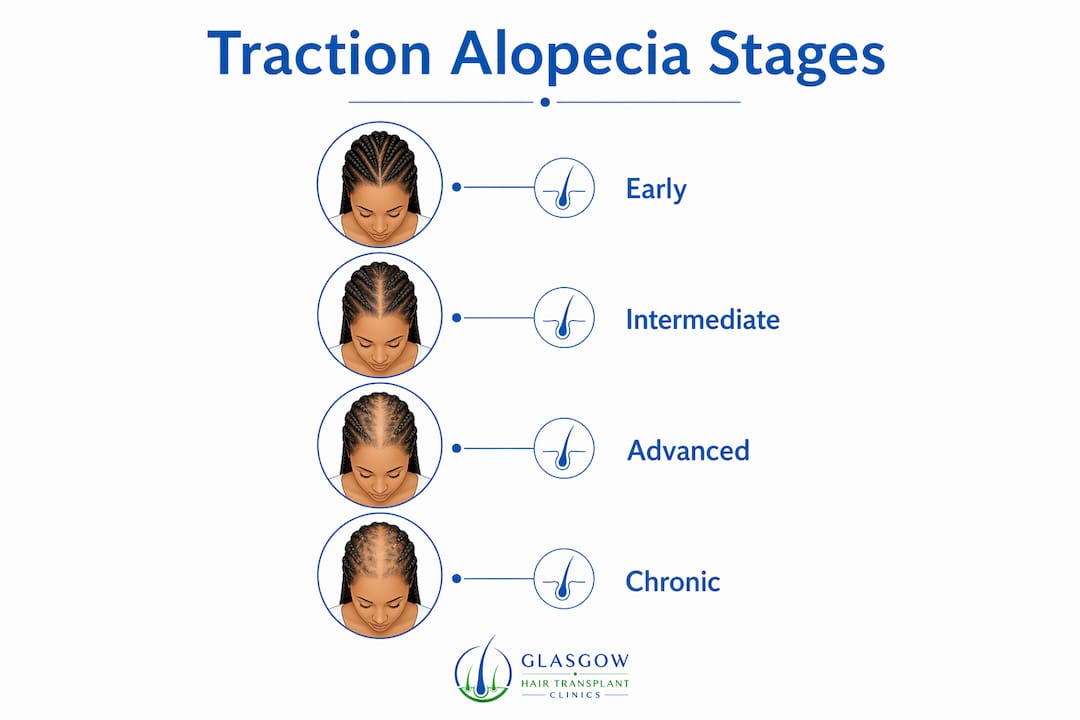
As the condition progresses, visible hair changes become apparent. The hairline recedes, particularly at the temples and along the front. Hair thins in the areas that bear the most tension, often forming a characteristic pattern around the forehead and ears.

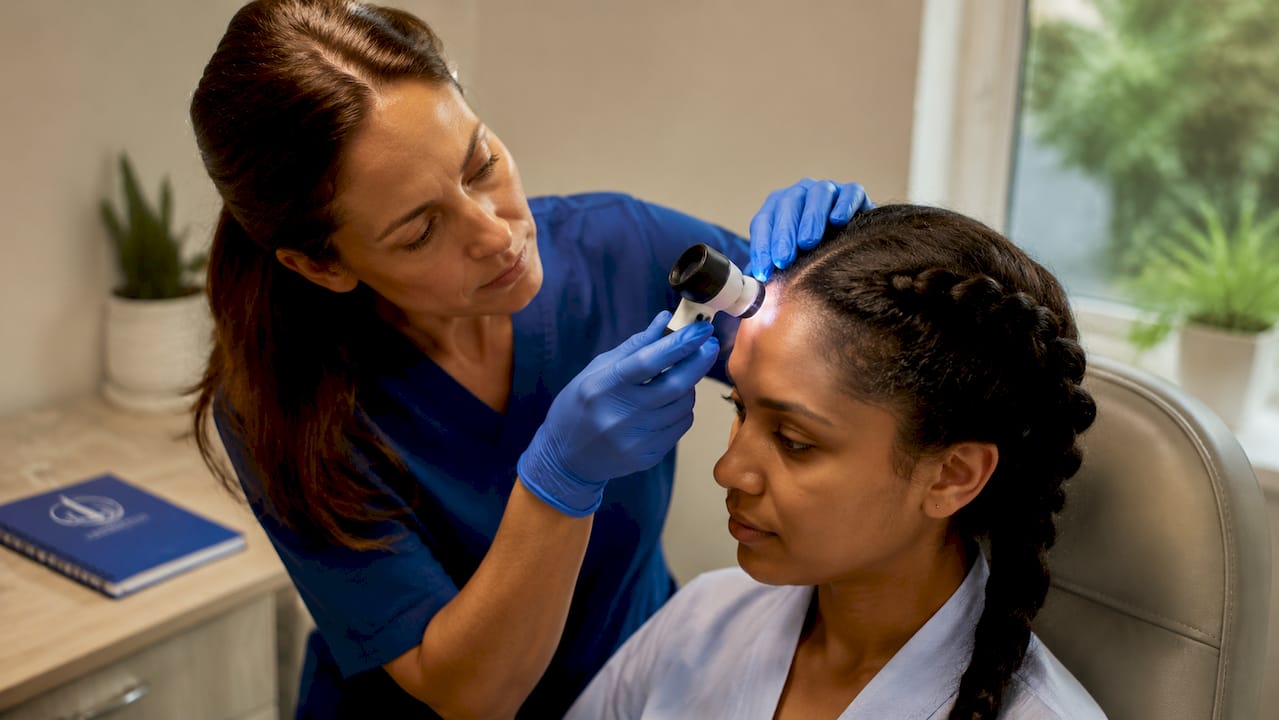
Clinicians use dermoscopy to detect changes that are invisible to the naked eye. Dermoscopy improves early diagnosis by revealing follicular miniaturisation and hair casts before significant hair loss has occurred. This makes it a valuable tool for confirming the diagnosis at a stage when treatment is still highly effective.

The “fringe sign” is a key diagnostic marker. It describes a band of short, retained hairs along the frontal hairline that indicates the follicles beneath are still viable. The fringe sign confirms follicle viability and signals that non-surgical treatment can still achieve meaningful recovery.

Stage Key signs Follicle status
Early Soreness, itching, perifollicular erythema Intact, reversible
Intermediate Hairline recession, broken hairs, fringe sign present Partially viable
Advanced Significant thinning, scarring fibrosis Permanent without surgery
What is traction alopecia: causes, signs, and treatment

How can traction alopecia be prevented effectively?

Prevention is the most effective strategy for managing this condition. Early recognition and stylist-clinician collaboration produce the best long-term outcomes. Once scarring fibrosis sets in, the options narrow considerably.

Practical prevention measures include:

  • Alternating hairstyles regularly to distribute tension across different follicle groups
  • Choosing looser styles that do not pull the hairline or temples
  • Limiting extension and weave wear to short periods with rest intervals in between
  • Avoiding tight styles on chemically treated hair , which is structurally weaker
  • Using soft, fabric-covered hair ties instead of elastic bands with metal clasps
  • Sleeping on a silk or satin pillowcase to reduce overnight friction and tension

Scalp health maintenance plays a supporting role. Keeping the scalp moisturised and avoiding harsh shampoos reduces baseline inflammation, which makes follicles more resilient to mechanical stress. Avoiding heat styling on days when you also wear tight hairstyles reduces the combined insult to the follicle.

The relationship between stylist and patient matters enormously. Hairdressers who understand traction alopecia can protect scalp health through styling choices that reduce risk without requiring patients to abandon their preferred aesthetic entirely. Open communication about scalp sensitivity is a practical first step.

Pro Tip: The most common mistake is ignoring scalp soreness after styling. Soreness is not normal. It is a signal that tension has exceeded what the follicles can tolerate. If your scalp aches after a new style, loosen it immediately rather than waiting for it to settle.


What treatment options are available for traction alopecia?

Treatment depends entirely on how far the condition has progressed. Early-stage treatment focuses on tension elimination and reducing follicular inflammation before permanent damage occurs.

The first and most critical step at any stage is removing the source of tension. Stopping the damaging hairstyle immediately gives the follicles the best chance of recovery. For many patients in the early stage, this single change produces visible improvement within weeks.

Medical treatments address the inflammation and follicular damage that tension has caused:

Treatment Stage Expected outcome
Corticosteroids (topical or injected) Early to intermediate Reduces inflammation, supports follicle recovery
Minoxidil (topical) Early to intermediate Stimulates regrowth in viable follicles
Platelet-rich plasma (PRP) therapy Early to intermediate Promotes follicle repair and hair density
Hair transplantation (FUE or FUT) Advanced with scarring Restores hair in areas of permanent loss

Corticosteroids, minoxidil, and PRP therapy each target different aspects of follicular damage. Their effectiveness depends on the health of the remaining follicles. Once scarring fibrosis has replaced the follicular tissue, these treatments cannot restore hair in the affected area.

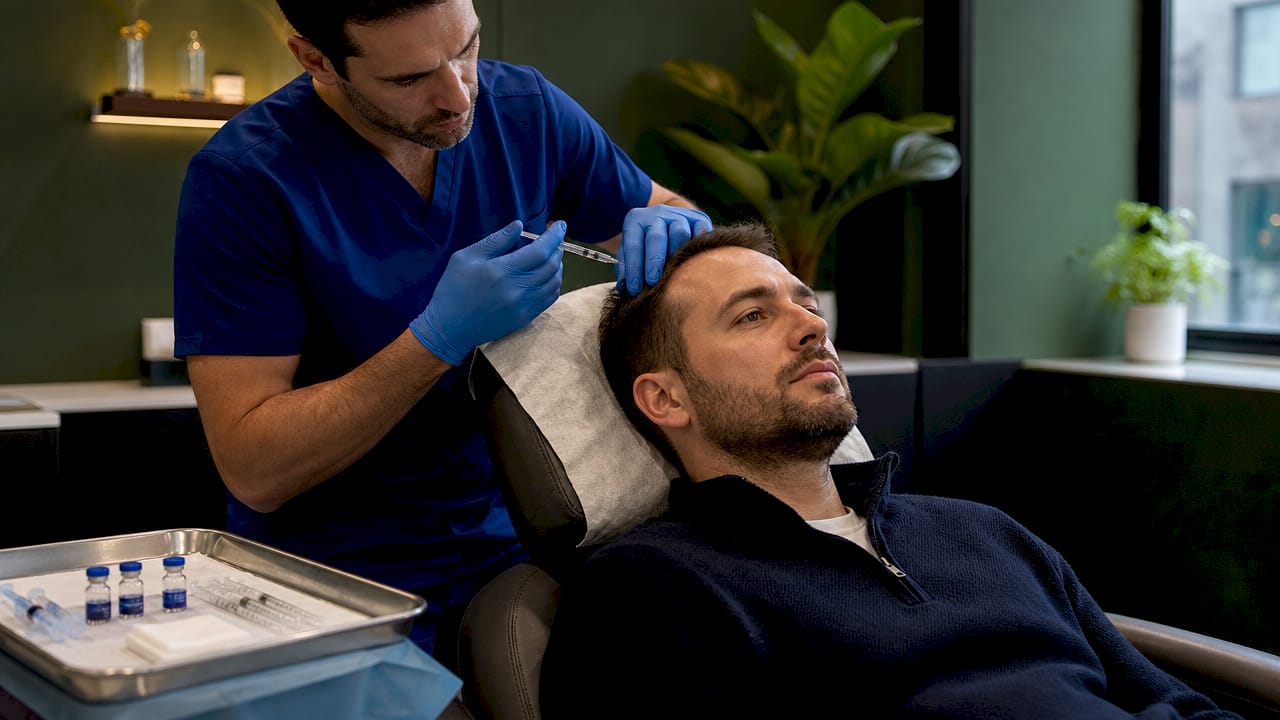
Platelet-rich plasma therapy is a non-surgical option that uses growth factors derived from the patient’s own blood to stimulate follicle repair. It is particularly useful in the intermediate stage, where follicles are damaged but not yet destroyed.

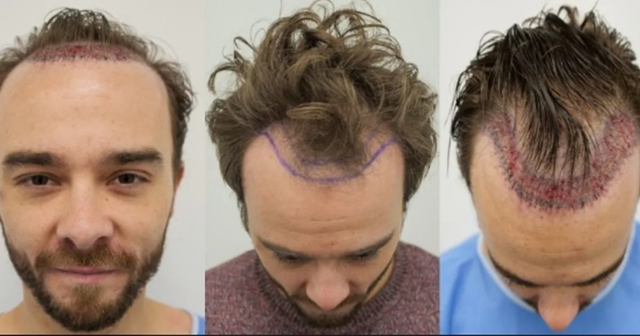
Hair transplantation is recommended for chronic cases where follicular damage is irreversible. Follicular Unit Extraction (FUE) is the most commonly used technique, relocating healthy follicles from a donor area to the scarred region. The procedure requires the patient to have stopped all tension-causing hairstyles before surgery and to maintain protective styling habits afterwards to protect the transplanted grafts.

Patient education is a core part of treatment at every stage. Understanding what caused the damage, and committing to changed styling habits, determines whether treatment succeeds long term.


Key takeaways

Traction alopecia is reversible when caught early, but becomes permanent once scarring fibrosis replaces the follicular tissue.

Point Details
Early detection is critical Scalp soreness and redness signal damage before visible hair loss appears.
Cumulative tension causes the damage Daily repetition of tight styles over months destroys follicles gradually.
Prevention outperforms treatment Alternating styles and rest periods protect follicles more effectively than any medical therapy.
Treatment options vary by stage Corticosteroids, minoxidil, and PRP address early damage; FUE transplantation addresses permanent loss.
The fringe sign guides prognosis Its presence confirms viable follicles and a realistic chance of non-surgical recovery.

Why early action matters more than most people realise

From working closely with patients affected by hair loss, the pattern I see most often is this: people notice the soreness, the itching, the slight recession at the temples, and they wait. They assume it will settle. They continue the same hairstyles for another year, sometimes two, before seeking advice. By that point, the window for straightforward recovery has often closed.

What strikes me most is that traction alopecia is genuinely preventable. Unlike androgenetic alopecia, which has a strong genetic component, this condition requires a specific, identifiable cause that can be removed. That makes it unusual in the world of hair loss, and it makes the delay in seeking help particularly frustrating to see.

The cultural dimension adds real complexity. For many patients, the hairstyles associated with traction alopecia carry deep personal and community significance. Telling someone to simply stop braiding their hair is not a realistic or respectful answer. The better approach is a collaborative one, working with stylists who understand scalp health, finding protective alternatives that preserve cultural identity, and monitoring the scalp regularly for early warning signs.

I also think the medical community underestimates how much patients can do for themselves once they understand the condition. Recognising that scalp soreness is a warning sign, not a normal part of styling, changes behaviour. That single piece of knowledge, applied early, prevents a great deal of permanent damage. The conversation around treating hair loss with confidence needs to start much earlier than it currently does.

— Harley


Specialist support for traction alopecia at Newcastlehairtransplantclinics

Traction alopecia responds well to early, expert assessment. Newcastlehairtransplantclinics offers both surgical and non-surgical options for patients at every stage of the condition, from PRP therapy and scalp health consultations through to Follicular Unit Extraction for advanced cases with permanent follicular loss.

What is traction alopecia: causes, signs, and treatment

All surgeons at Newcastlehairtransplantclinics are registered with the General Medical Council (GMC), and clinics hold CQC and HIS registration for your peace of mind. Whether you are noticing the first signs of hairline recession or have been living with significant thinning for years, a free consultation gives you a clear picture of your options. Book your assessment through the Newcastlehairtransplantclinics main page and take the first step toward informed, personalised care.


FAQ

What is traction alopecia in simple terms?

Traction alopecia is hair loss caused by repeated pulling on hair follicles from tight hairstyles such as braids, ponytails, and extensions. The damage accumulates over time and becomes permanent if the tension is not removed early enough.

How long does traction alopecia last?

Early-stage traction alopecia can resolve within weeks to months once the source of tension is removed. Advanced cases involving scarring fibrosis result in permanent hair loss that requires surgical restoration.

Can traction alopecia grow back?

Hair can regrow in early and intermediate stages, particularly when the fringe sign is present, indicating that follicles remain viable. Once scarring replaces the follicular tissue, regrowth without surgical intervention is not possible.

What are the first signs of traction alopecia?

The earliest signs are scalp soreness, itching, and redness around the follicle openings after styling, known as perifollicular erythema. These symptoms appear before any visible hair loss and are the clearest signal to change styling habits immediately.

Is traction alopecia the same as other types of hair loss?

Traction alopecia differs from androgenetic alopecia and alopecia areata because it has a direct, mechanical cause that can be identified and removed. This makes it one of the most preventable forms of hair loss when recognised early.

Recommended

What is traction alopecia: causes, signs, and treatment

Traction alopecia is defined as hair loss caused by chronic mechanical pulling on hair follicles, most commonly from tight hairstyles such as braids, ponytails, weaves, and extensions. The British Skin Foundation recognises it as a preventable form of hair loss, meaning the damage is avoidable when caught early. Left unaddressed, repeated tension causes progressive follicular inflammation that eventually leads to permanent scarring. Understanding the condition is the first step toward protecting your hair and scalp health.

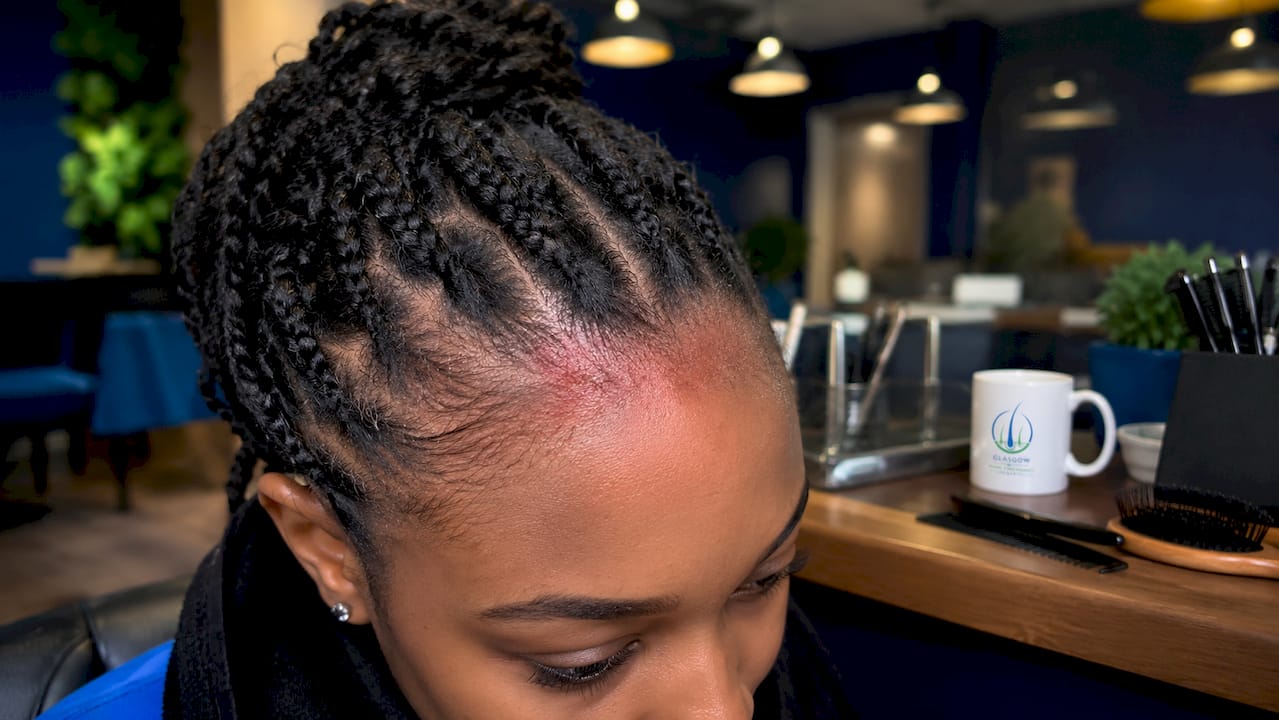
Braided hairstyle associated with traction on the hairline
Certifications General Medical CouncilInternational Society of Hair Restoration SurgeryInformation Commissioner's Office
Published
5 July 2026
Updated
30 August 2026

What is traction alopecia and what causes it?

Traction alopecia is hair loss produced by sustained, repetitive tension on the hair shaft and follicle. The mechanical force does not need to be extreme to cause damage. Consistent, low-level pulling over weeks or months is enough to trigger follicular inflammation and damage that precedes any visible hair loss.

The most common traction alopecia causes include:

  • Tight ponytails and buns pulled high or back with elastic bands
  • Braids, cornrows, and dreadlocks that place sustained tension along the hairline
  • Weaves and hair extensions that add mechanical weight to existing follicles
  • Tight headbands and hair clips worn daily over the same areas
  • Rollers and hair pins left in overnight or used repeatedly

Chemical relaxers and heat treatments compound the risk significantly. Chemical relaxers combined with traction weaken the hair shaft structurally, making follicles far more vulnerable to mechanical stress. This means a hairstyle that might be tolerable on untreated hair can cause serious damage on chemically processed hair.

One factor that many people overlook is weight. Heavy hair and extensions exert a downward mechanical strain that is comparable to the tension from tight styling. Patients who avoid chemical treatments often assume their styling is gentle, but the physical weight alone can cause cumulative follicular damage over time.

Cultural and occupational practices also influence prevalence. Certain communities with traditions of tight braiding or weaving from childhood face a higher cumulative risk, particularly when these styles are worn continuously without rest periods.

Pro Tip: Cumulative damage is the real danger. A single tight ponytail rarely causes lasting harm. It is the daily repetition over months and years that destroys follicles. Track how often you wear high-tension styles and build in regular rest days.


What are the symptoms of traction alopecia?

Recognising the symptoms of traction alopecia early is the single most effective way to prevent permanent hair loss. The condition progresses through distinct stages, and the window for full recovery closes once scarring begins.

Early warning signs appear before any visible hair loss:

  1. Scalp soreness or tenderness along the hairline or parting after styling
  2. Itching and redness at the follicle openings, known clinically as perifollicular erythema
  3. Flaking or scaling of the scalp in areas under tension
  4. Small pimples or pustules around hair follicles at the hairline
  5. Broken hairs and short, fragile strands in high-tension zones

As the condition progresses, visible hair changes become apparent. The hairline recedes, particularly at the temples and along the front. Hair thins in the areas that bear the most tension, often forming a characteristic pattern around the forehead and ears.

Clinicians use dermoscopy to detect changes that are invisible to the naked eye. Dermoscopy improves early diagnosis by revealing follicular miniaturisation and hair casts before significant hair loss has occurred. This makes it a valuable tool for confirming the diagnosis at a stage when treatment is still highly effective.

The “fringe sign” is a key diagnostic marker. It describes a band of short, retained hairs along the frontal hairline that indicates the follicles beneath are still viable. The fringe sign confirms follicle viability and signals that non-surgical treatment can still achieve meaningful recovery.

Stage Key signs Follicle status
Early Soreness, itching, perifollicular erythema Intact, reversible
Intermediate Hairline recession, broken hairs, fringe sign present Partially viable
Advanced Significant thinning, scarring fibrosis Permanent without surgery

How can traction alopecia be prevented effectively?

Prevention is the most effective strategy for managing this condition. Early recognition and stylist-clinician collaboration produce the best long-term outcomes. Once scarring fibrosis sets in, the options narrow considerably.

Practical prevention measures include:

  • Alternating hairstyles regularly to distribute tension across different follicle groups
  • Choosing looser styles that do not pull the hairline or temples
  • Limiting extension and weave wear to short periods with rest intervals in between
  • Avoiding tight styles on chemically treated hair , which is structurally weaker
  • Using soft, fabric-covered hair ties instead of elastic bands with metal clasps
  • Sleeping on a silk or satin pillowcase to reduce overnight friction and tension

Scalp health maintenance plays a supporting role. Keeping the scalp moisturised and avoiding harsh shampoos reduces baseline inflammation, which makes follicles more resilient to mechanical stress. Avoiding heat styling on days when you also wear tight hairstyles reduces the combined insult to the follicle.

The relationship between stylist and patient matters enormously. Hairdressers who understand traction alopecia can protect scalp health through styling choices that reduce risk without requiring patients to abandon their preferred aesthetic entirely. Open communication about scalp sensitivity is a practical first step.

Pro Tip: The most common mistake is ignoring scalp soreness after styling. Soreness is not normal. It is a signal that tension has exceeded what the follicles can tolerate. If your scalp aches after a new style, loosen it immediately rather than waiting for it to settle.


What treatment options are available for traction alopecia?

Treatment depends entirely on how far the condition has progressed. Early-stage treatment focuses on tension elimination and reducing follicular inflammation before permanent damage occurs.

The first and most critical step at any stage is removing the source of tension. Stopping the damaging hairstyle immediately gives the follicles the best chance of recovery. For many patients in the early stage, this single change produces visible improvement within weeks.

Medical treatments address the inflammation and follicular damage that tension has caused:

Treatment Stage Expected outcome
Corticosteroids (topical or injected) Early to intermediate Reduces inflammation, supports follicle recovery
Minoxidil (topical) Early to intermediate Stimulates regrowth in viable follicles
Platelet-rich plasma (PRP) therapy Early to intermediate Promotes follicle repair and hair density
Hair transplantation (FUE or FUT) Advanced with scarring Restores hair in areas of permanent loss

Corticosteroids, minoxidil, and PRP therapy each target different aspects of follicular damage. Their effectiveness depends on the health of the remaining follicles. Once scarring fibrosis has replaced the follicular tissue, these treatments cannot restore hair in the affected area.

Platelet-rich plasma therapy is a non-surgical option that uses growth factors derived from the patient’s own blood to stimulate follicle repair. It is particularly useful in the intermediate stage, where follicles are damaged but not yet destroyed.

Hair transplantation is recommended for chronic cases where follicular damage is irreversible. Follicular Unit Extraction (FUE) is the most commonly used technique, relocating healthy follicles from a donor area to the scarred region. The procedure requires the patient to have stopped all tension-causing hairstyles before surgery and to maintain protective styling habits afterwards to protect the transplanted grafts.

Patient education is a core part of treatment at every stage. Understanding what caused the damage, and committing to changed styling habits, determines whether treatment succeeds long term.


Key takeaways

Traction alopecia is reversible when caught early, but becomes permanent once scarring fibrosis replaces the follicular tissue.

Point Details
Early detection is critical Scalp soreness and redness signal damage before visible hair loss appears.
Cumulative tension causes the damage Daily repetition of tight styles over months destroys follicles gradually.
Prevention outperforms treatment Alternating styles and rest periods protect follicles more effectively than any medical therapy.
Treatment options vary by stage Corticosteroids, minoxidil, and PRP address early damage; FUE transplantation addresses permanent loss.
The fringe sign guides prognosis Its presence confirms viable follicles and a realistic chance of non-surgical recovery.

Why early action matters more than most people realise

From working closely with patients affected by hair loss, the pattern I see most often is this: people notice the soreness, the itching, the slight recession at the temples, and they wait. They assume it will settle. They continue the same hairstyles for another year, sometimes two, before seeking advice. By that point, the window for straightforward recovery has often closed.

What strikes me most is that traction alopecia is genuinely preventable. Unlike androgenetic alopecia, which has a strong genetic component, this condition requires a specific, identifiable cause that can be removed. That makes it unusual in the world of hair loss, and it makes the delay in seeking help particularly frustrating to see.

The cultural dimension adds real complexity. For many patients, the hairstyles associated with traction alopecia carry deep personal and community significance. Telling someone to simply stop braiding their hair is not a realistic or respectful answer. The better approach is a collaborative one, working with stylists who understand scalp health, finding protective alternatives that preserve cultural identity, and monitoring the scalp regularly for early warning signs.

I also think the medical community underestimates how much patients can do for themselves once they understand the condition. Recognising that scalp soreness is a warning sign, not a normal part of styling, changes behaviour. That single piece of knowledge, applied early, prevents a great deal of permanent damage. The conversation around treating hair loss with confidence needs to start much earlier than it currently does.

— Harley


Specialist support for traction alopecia at Newcastlehairtransplantclinics

Traction alopecia responds well to early, expert assessment. Newcastlehairtransplantclinics offers both surgical and non-surgical options for patients at every stage of the condition, from PRP therapy and scalp health consultations through to Follicular Unit Extraction for advanced cases with permanent follicular loss.

All surgeons at Newcastlehairtransplantclinics are registered with the General Medical Council (GMC), and clinics hold CQC and HIS registration for your peace of mind. Whether you are noticing the first signs of hairline recession or have been living with significant thinning for years, a free consultation gives you a clear picture of your options. Book your assessment through the Newcastlehairtransplantclinics main page and take the first step toward informed, personalised care.


FAQ

What is traction alopecia in simple terms?

Traction alopecia is hair loss caused by repeated pulling on hair follicles from tight hairstyles such as braids, ponytails, and extensions. The damage accumulates over time and becomes permanent if the tension is not removed early enough.

How long does traction alopecia last?

Early-stage traction alopecia can resolve within weeks to months once the source of tension is removed. Advanced cases involving scarring fibrosis result in permanent hair loss that requires surgical restoration.

Can traction alopecia grow back?

Hair can regrow in early and intermediate stages, particularly when the fringe sign is present, indicating that follicles remain viable. Once scarring replaces the follicular tissue, regrowth without surgical intervention is not possible.

What are the first signs of traction alopecia?

The earliest signs are scalp soreness, itching, and redness around the follicle openings after styling, known as perifollicular erythema. These symptoms appear before any visible hair loss and are the clearest signal to change styling habits immediately.

Is traction alopecia the same as other types of hair loss?

Traction alopecia differs from androgenetic alopecia and alopecia areata because it has a direct, mechanical cause that can be identified and removed. This makes it one of the most preventable forms of hair loss when recognised early.

Get traction-related hair loss assessed

Our Newcastle team can assess the affected areas, discuss styling changes and explain medical or restorative options.

Book a Free Consultation

September 25, 2026
UK hair-loss figures explained: pattern hair loss, alopecia areata, daily shedding and treatment research, with sources and context for Newcastle readers.
September 25, 2026
How to prepare for a hair transplant and protect new grafts afterwards, with UK guidance on medicines, washing, exercise, shedding and when to seek help.
September 25, 2026
Hair loss can affect wellbeing, but treatment is personal. Learn when to see a GP, what options are available and what to ask before considering surgery.
September 25, 2026
Feeling self-conscious about thinning hair can make everyday moments in Newcastle a little less confident. For many women, hair loss is more than a cosmetic concern—it often reflects complex health factors such as hormones, nutrition, and stress. If you’re searching for reliable answers and treatments that truly address the underlying causes, this guide highlights a whole-body approach and practical steps for reclaiming healthy hair and wellbeing with expert guidance tailored to your needs.
September 25, 2026
Prepare for a hair loss consultation with a checklist of photographs, medical history, medicines, questions and treatment goals to bring to your appointment.
September 25, 2026
Learn how local anaesthesia is used during hair transplant surgery, what patients may feel, possible side effects and what to discuss before treatment.
September 25, 2026
What the VDPHL01 trial’s 86% figure measures, why it is not 86% regrowth, and how to interpret investigational hair-loss treatment news.
September 25, 2026
Jack P. Shepherd’s public hair-transplant story and the lessons for donor planning, future hair loss and realistic expectations.
September 25, 2026
Understand common causes of hair loss in young men, what finasteride and minoxidil can do, their risks, and when a UK transplant may be appropriate for you.
September 25, 2026
Learn which scalp conditions can affect shedding or hair growth, what evidence supports, and when dandruff, inflammation or sudden loss needs medical advice.
Show More