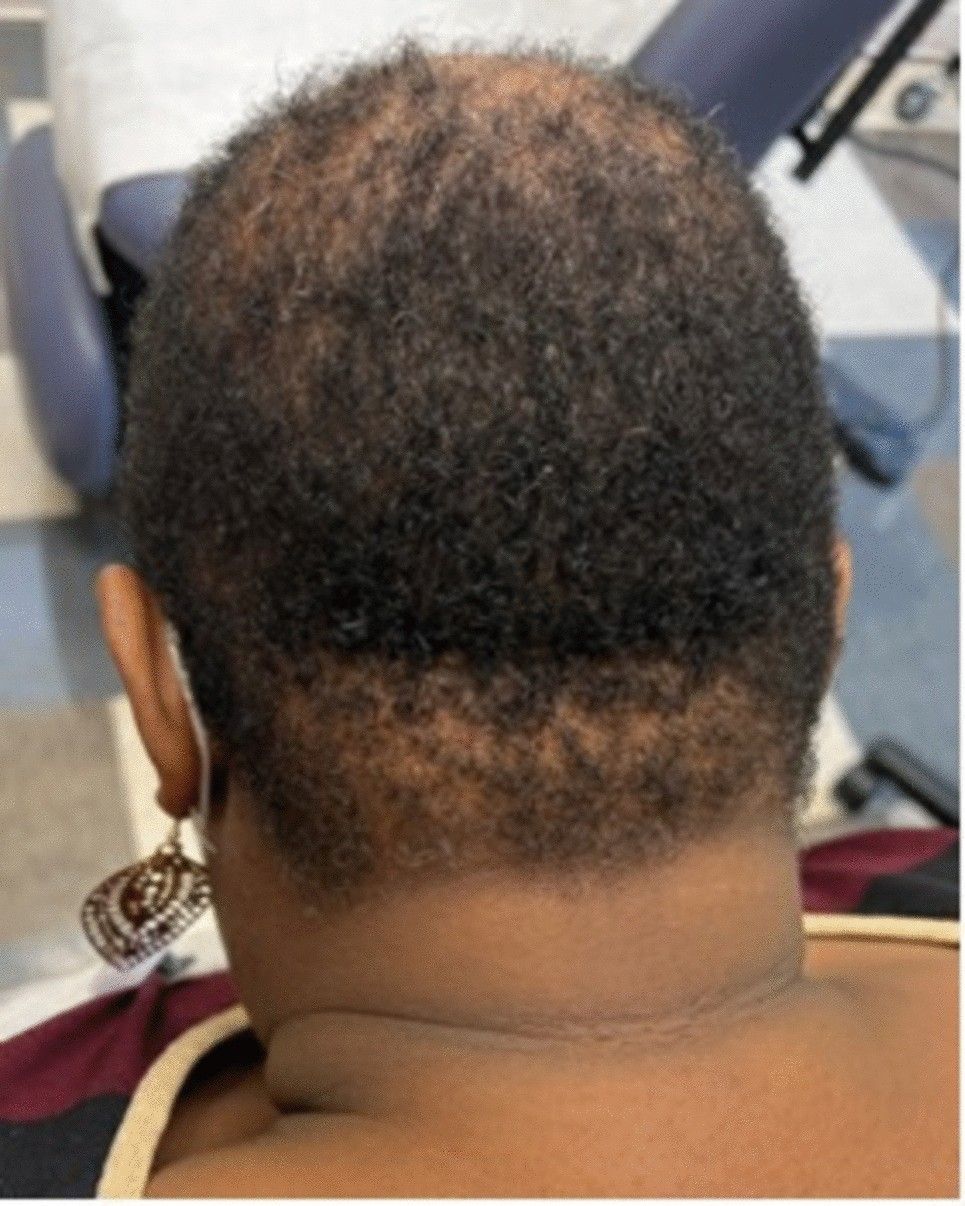
Early signs of thinning hair
A widening parting, changing hairline or increased shedding may be worth recording. Sudden or patchy loss needs medical advice.

1. what are the early signs of hair loss you can spot at home?
The most reliable early warning signs are visible changes you can observe without any specialist equipment. Gradual thinning at the crown, a widening parting, and a receding hairline at the temples are the three most reported initial hair loss symptoms in clinical practice. These changes often develop slowly over months, which is why many people miss them until significant density has already been lost.
- Thinning at the crown or temples. Hair becomes finer and shorter in these areas before it disappears entirely. You may notice your scalp is more visible under bright light.
- A widening hair parting. The parting line broadens as density reduces along the top of the scalp. This is one of the earliest hair thinning signs in women.
- Increased hair on your pillow or in the shower drain. Finding noticeably more hair after sleeping or washing is a common early baldness indicator.
- Changes in hair texture. Hair may feel finer, more brittle, or less voluminous than it used to. This reflects follicle miniaturisation in its early stages.
- Hairbrush accumulation. A significant increase in hair collected on your brush after a standard brushing session is worth monitoring.
The gentle pull test is a simple home method to assess shedding. Grip a small section of around 60 hairs between your fingers and pull slowly from root to tip. Losing more than six hairs consistently suggests above-normal shedding and warrants further assessment.
Take a photograph of your parting and crown in consistent lighting every four to six weeks. Visual comparison over time is far more reliable than relying on memory alone.
2. what causes these early signs?
Understanding the cause behind your symptoms determines which treatment will work. The most common trigger is androgenetic alopecia, where the hormone dihydrotestosterone (DHT) causes hair follicles to shrink progressively. Over 95% of male hair loss is attributed to this pattern, and a similar genetic mechanism affects women, though the presentation differs.
Several other causes are worth knowing:
- Thyroid dysfunction and iron deficiency. Hair loss can be an early marker of systemic health issues including low ferritin levels and thyroid imbalance. Both are treatable once identified through blood tests.
- Hormonal changes. Pregnancy, the postpartum period, and menopause all trigger temporary or longer-term shedding in women. The role of hormones in female hair loss is well established and often underestimated.
- Telogen effluvium. Physical or emotional stress pushes a large proportion of follicles into the resting phase simultaneously, causing diffuse shedding two to three months after the triggering event.
- Traction alopecia. Tight hairstyles such as high ponytails, braids, and extensions place repeated mechanical stress on follicles, particularly along the hairline. This is a preventable cause of early thinning.
- Alopecia areata. An autoimmune condition causing patchy loss, often appearing suddenly. It requires specialist evaluation rather than self-management.
The role of genetics in baldness means that a family history of hair loss significantly raises your personal risk. Knowing this allows you to monitor for signs earlier and act before miniaturisation becomes advanced.
3. how to tell normal shedding from early baldness signs
The clinical threshold for concern is consistent shedding above 100 hairs per day over several weeks. However, the amount of hair you see after washing can reflect your washing frequency, hair length, and natural cycle phase rather than pathological loss. Clumped hair after a wash following several days without washing is not automatically alarming.
Is your hair starting to thin? early signs worth checking
By Dr Harpreet Kalra · Updated 30 August 2026 · 7 minute read
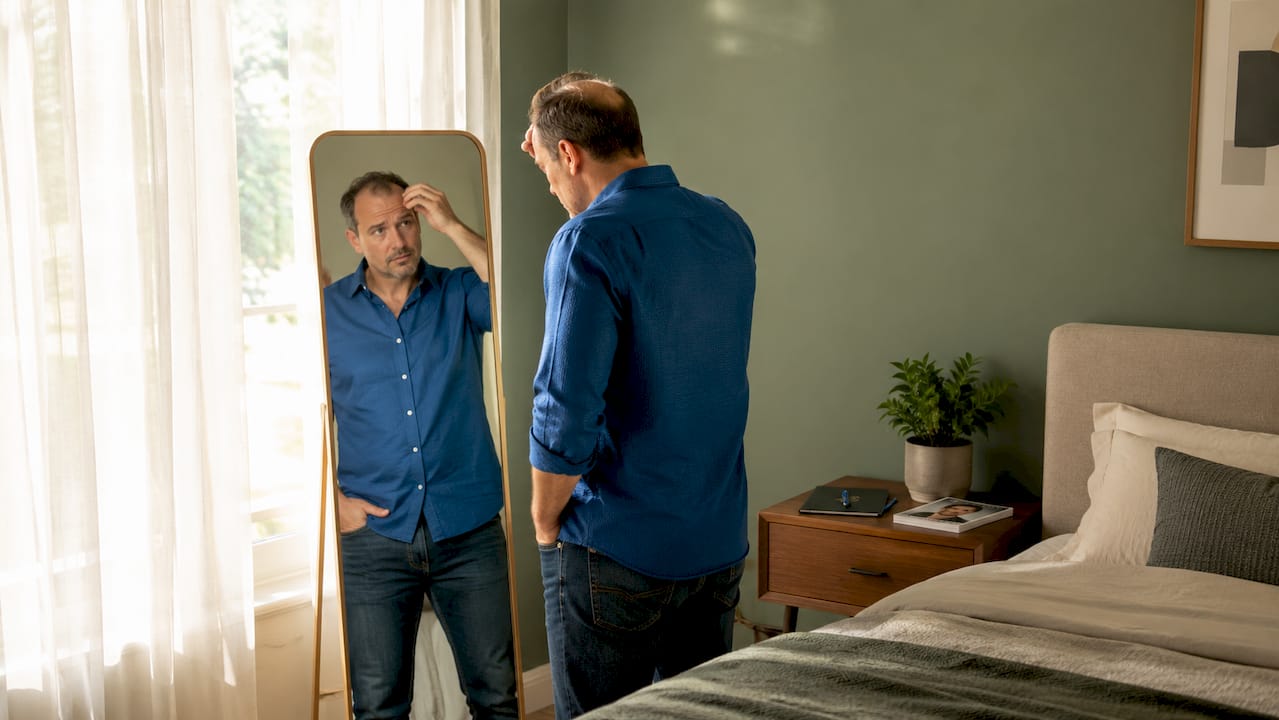
Most people notice early hair loss as a change from what is normal for them: a little more scalp at the crown, a hairline that has moved back, or a parting that seems wider in photographs. A handful of hairs in the shower on one particular day says much less.
Pattern and pace matter. Gradual recession is assessed differently from a smooth new bald patch, heavy shedding after illness or a sore, scaly scalp. Appearance alone cannot always establish the cause, which is why the NHS recommends seeing a GP if you are worried about hair loss before approaching a commercial clinic.
What tends to change first?
The hairline and temples
Male pattern hair loss commonly begins with gradual recession at the frontal hairline and temples. The two sides are not always identical, and a mature adult hairline is not automatically evidence of active loss. Photographs taken several months apart are more useful than judging a single image.
The crown or central parting
More scalp may become visible around the crown, particularly under strong overhead light. Female pattern hair loss more often reduces density over the top of the scalp and widens the parting while leaving the frontal hairline relatively intact. Hair styling, product, lighting and wet hair can all exaggerate the appearance, so consistency matters when comparing photographs.
Hair calibre
In pattern hair loss, susceptible follicles may produce progressively finer, shorter hairs. A mixture of thick and very fine hairs in an affected area can be a useful clinical clue. It is not the same as brittle hair snapping after heat, chemical processing or repeated mechanical damage.
Shedding across the scalp
Diffuse shedding can follow illness, major stress, pregnancy, marked weight loss, iron deficiency, thyroid disease or a change in medication. It may not become obvious until weeks or months after the trigger. This is different from the slowly enlarging frontal or crown pattern typical of androgenetic alopecia.
Hair loss where styles pull
Braids, extensions, tight ponytails and other styles that repeatedly pull on the same follicles can cause traction alopecia. Reducing tension early gives the best chance of preventing permanent damage.
Shedding is not a fixed daily test
The NHS says that losing about 50 to 100 hairs a day can be normal. The number you see also depends on hair length, how often you wash or brush it and where each follicle is in its growth cycle. Counting every strand often creates more anxiety without showing whether density has actually changed.
A home hair-pull test is not a reliable diagnosis. Clinicians sometimes use a pull test alongside the history and scalp examination, but washing, technique and the phase of the hair cycle affect the result.
A better record is a set of monthly photographs taken with dry hair, the same parting, the same camera distance and similar lighting. Include the front, both temples, the top and the crown. Avoid taking photographs every day; normal variation can make them misleading.
When a GP should assess the change
Make an appointment if the change is sudden or rapidly increasing, or if you notice one or more smooth round patches, loss of eyebrow or body hair, marked itching, pain, burning, redness, scaling, crusting or pustules. A shiny area with fewer visible follicle openings also needs assessment.
None of these signs confirms a serious disorder, but they warrant assessment because alopecia areata, scalp infection and scarring alopecia are managed differently from ordinary pattern loss. The Primary Care Dermatology Society's alopecia overview stresses the importance of distinguishing scarring from non-scarring hair loss because damaged follicles may not regrow.
Tell the GP if shedding followed a new medicine, illness or marked weight change, or if there are other health symptoms. The clinic's types of alopecia guide explains the broad differences between pattern loss, autoimmune loss, temporary shedding and scarring conditions.
What an assessment involves
A GP or dermatologist will usually ask where the change began, how quickly it progressed and whether the scalp has symptoms. Recent illness, pregnancy, weight change, diet, medication, hair-care practices and family history may all be relevant.
The clinician then examines the pattern and the scalp. Blood tests are not necessary for everyone, but selected tests may be appropriate if the history suggests iron deficiency, thyroid disease or another medical cause. Magnified examination, fungal testing or a small scalp biopsy is sometimes required when the diagnosis is uncertain.
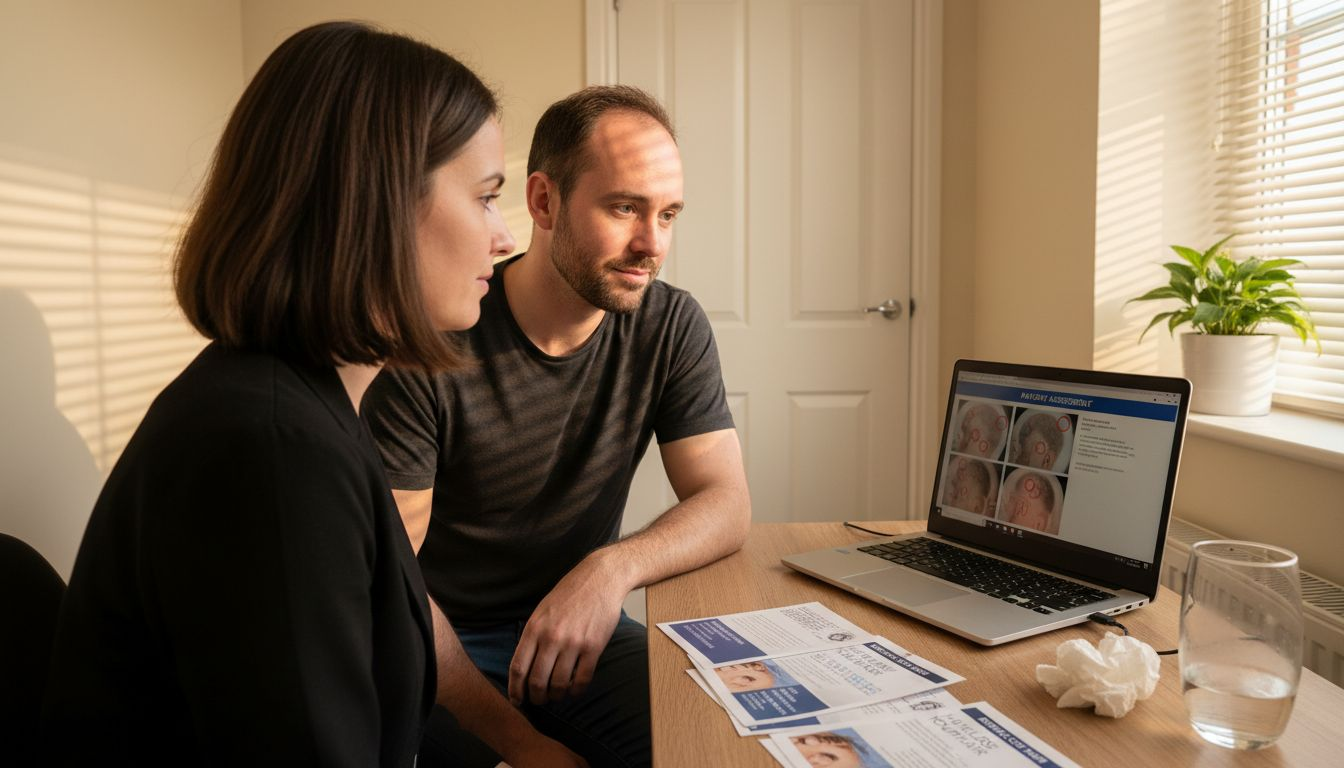
Bring a list of medicines and supplements, a short timeline and any photographs taken under consistent conditions. The clinic's consultation preparation guide gives a practical checklist.
Treatment depends on the diagnosis
There is no single treatment for every form of hair loss. Telogen effluvium often improves once the trigger has settled, although persistent shedding needs review. Alopecia areata and scarring alopecia may require dermatology treatment. Removing repeated tension is central to early traction alopecia.
For confirmed pattern hair loss, a clinician may discuss topical minoxidil for men or women, depending on the licensed product and individual suitability. Finasteride 1 mg is a prescription treatment licensed for male pattern hair loss; it is not licensed for female pattern hair loss in the UK, and the NHS advises women not to use it. Neither medicine works for everyone, and benefit generally depends on continued use.
The MHRA's updated finasteride warning covers depression, suicidal thoughts and sexual dysfunction; sexual dysfunction has sometimes persisted after treatment stopped. A prescriber should ask about any history of depression or suicidal thoughts. Anyone taking finasteride 1 mg who develops depression or suicidal thoughts should stop it and contact a healthcare professional as soon as possible. Call 999 if there is an immediate risk of serious harm, and contact the prescriber about sexual dysfunction.
PRP is offered privately, but the British Association of Dermatologists describes the evidence as limited and the response as unpredictable. It should not be presented as a diagnosis or guaranteed treatment. The clinic's hair-loss treatment page sets out medical, non-surgical and surgical options.
Where a transplant fits
A transplant is not the first response to unexplained shedding or an active scalp disorder. It may be considered for suitable, stable and permanent loss only after the cause, donor area and likely future pattern have been assessed.
FUE and FUT describe the main ways donor follicles are obtained. DHI generally describes placement of prepared grafts with an implanter device, commonly after individual follicular-unit extraction. It is not a separate cure for early hair loss and does not remove the need for diagnosis or careful donor planning.
If the only evidence is a photograph taken under unfamiliar lighting, the most sensible step may simply be to create a consistent record and review it later. If symptoms, patches or rapid change are present, seek a medical assessment rather than waiting for a cosmetic consultation.
Questions and answers
Does a visible crown whorl mean I am going bald?
Not by itself. Hair direction, lighting and the haircut can expose scalp at the whorl. Compare photographs taken under similar conditions and seek an assessment if coverage appears to be changing.
Is counting shed hairs enough to diagnose hair loss?
No. Counts vary with washing, brushing and hair length. Changes in density, the distribution of thinning and scalp symptoms are more useful alongside a clinical history.
Should I wait until the thinning is obvious?
You can seek advice as soon as it concerns you. An assessment can establish a baseline and explain whether monitoring, investigation or treatment is appropriate.
Dr Harpreet Kalra
Newcastle Hair Transplant Clinic